Manufactured Homes in Siskiyou County: Buying, Financing & Selling
September 8, 2026
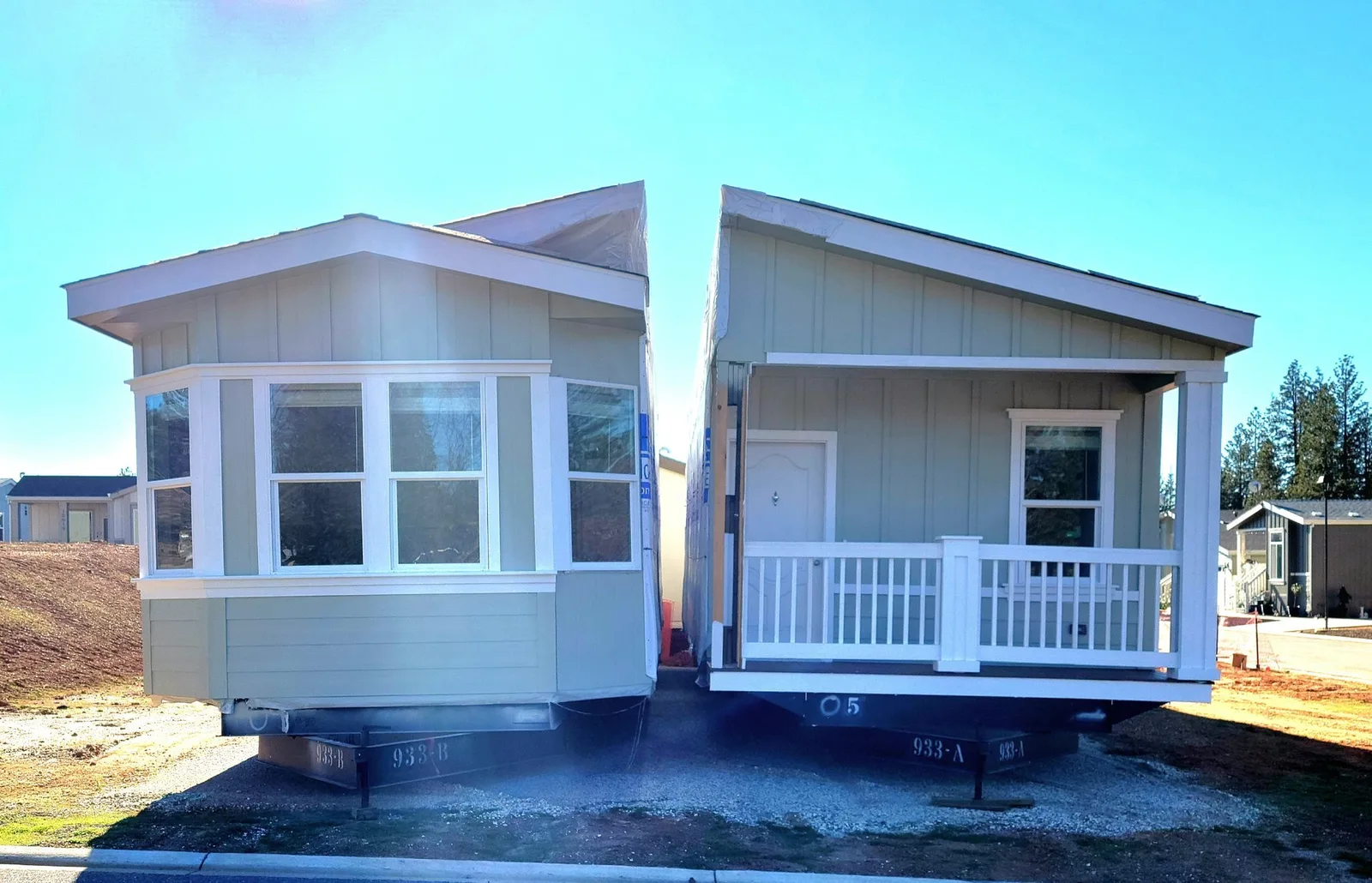
Manufactured homes are a real part of the housing picture in Siskiyou County, both on rural acreage and in mobilehome parks. They can be an affordable way into the area, but they are bought, financed and sold under different rules from a site-built house. This guide explains those rules as of 2026.
This is general information, not legal or tax advice. For a specific home, check with the county, the state and your lender.
Personal property or real property?
The single most important question about a manufactured home is whether it is legally personal property or real property. Everything else, including financing, taxes and how it's sold, follows from the answer.
Personal property
- Title
- HCD
- Typical home
- In a mobilehome park, or older and never converted
- Financing
- Usually a personal-property (chattel) loan; fewer lenders
- At sale
- A county tax clearance before HCD transfers title
Real property
- Title
- A deed
- Typical home
- On a permanent foundation, with an HCD 433A recorded
- Financing
- Far more options, including FHA and Fannie Mae
- At sale
- Deed, title insurance and escrow, like a house
- Personal property. The home is registered and titled with the California Department of Housing and Community Development (HCD), much like a vehicle. This is typical of homes in mobilehome parks, where the owner rents the space, and of some older homes on private land that were never converted.
- Real property. The home has been installed on a permanent foundation system and legally joined to the land. From then on it is bought and sold with the land, like a site-built house, with a deed, title insurance and escrow.
What "433A" means
The conversion from personal to real property happens through a process under California Health and Safety Code section 18551. The local building department inspects the installation on an approved foundation system and issues a certificate of occupancy. A form called the HCD 433A is then recorded with the county recorder, and HCD cancels its registration. Once recorded, the home is treated as a fixture of the land.
If you are buying a manufactured home on land, ask early whether a 433A has been recorded. The title company can confirm it. A home that sits on a foundation but was never converted on paper is still personal property, and that affects which loans are available.
How manufactured homes are taxed
Manufactured homes in California pay either local property tax or an annual in-lieu license fee to the state.
- Homes first sold new on or after July 1, 1980 are subject to local property tax, like a house.
- Homes first sold new before that date generally pay an annual license fee through HCD, unless an owner voluntarily moved the home onto the local tax roll.
- A home converted to real property is assessed with the land.
When a home titled with HCD is sold, HCD generally won't transfer the title until the county tax collector issues a tax clearance certificate showing the property taxes are paid. Build that step into your timeline.
Buying in a park versus buying with land
In a mobilehome park
You buy the home and rent the space. Your monthly cost is the loan (if any) plus space rent, and the space rent can go up. California's Mobilehome Residency Law (Civil Code section 798 and following) governs the relationship between park owners and residents, including rules on rent notices, park rules and the sale of homes in the park. Park management generally has the right to approve a new resident, so apply early. Read the park rules and the rental agreement before you commit, and ask about the history of rent increases. HCD publishes a Mobilehome Residency Law handbook and runs a program that helps residents with complaints under the law.
Financing for a home in a park is usually a personal-property (chattel) loan rather than a mortgage, and fewer lenders offer them.
On your own land
Owning the land and the home together is usually the stronger long-term position. You control the property, there is no space rent, and if the home has been converted to real property, you have far more financing options. Check the basics you would check on any rural parcel: well, septic, access and zoning. Our guides to wells, septic and water and buying land cover those.
Financing a manufactured home
Mortgage programs have specific rules for manufactured homes. The main ones, as of 2026:
- The HUD Code. Homes built since June 15, 1976 were built to federal HUD standards and carry a HUD certification label on each section and a data plate inside. Homes built before that date are generally very hard to finance with a mortgage.
- FHA requires the home to be built after June 15, 1976, have at least 400 square feet, be classified and taxed as real estate, and sit on a permanent foundation certified by a licensed engineer or architect as meeting HUD's permanent foundation guide.
- Fannie Mae conventional loans require the home and land to be legally real property, the home to be at least 12 feet wide with at least 400 square feet of finished area, the towing hitch, wheels and axles removed, and a HUD data plate or labels.
- USDA guaranteed loans were limited to new manufactured homes for years. A 2025 rule change opened the program to existing manufactured homes that meet its standards, though a home that has been moved from its original site is still generally ineligible.
- VA can also guarantee loans on manufactured homes that meet its requirements.
Missing HUD labels, a home moved from another site, additions built without permits or a foundation that doesn't meet the guide are the usual stumbling blocks. Talk to a lender with manufactured-home experience before you write an offer, and expect the lender to order a foundation certification if one isn't on file. Our article on home loans for Siskiyou County buyers covers these programs more broadly.
Snow load and the data plate
Here is where Siskiyou County differs from much of California. The data plate inside a HUD-code home lists the roof load it was designed for. Siskiyou County's building department notes that since January 1993, HCD has required new or used mobile homes placed after that date to meet the same minimum design loads as site-built homes. As of 2026, the county's roof snow load bulletin lists a 60 psf flat roof snow load for McCloud, Mt. Shasta, Weed, Dunsmuir and Happy Camp, and 40 psf for areas including Yreka, Montague and Macdoel, with site-specific loads above 5,000 feet. Where a home's design load falls short, the county allows an engineered roof structure over it as one way to meet the requirement. Inside city limits, the city's own building department sets the requirements, so check with it for a home in town.
For buyers, that means a few practical questions:
- What roof load is shown on the data plate?
- Was the home installed with a permit, and is there a final inspection on file?
- Is there a snow roof or ramada, and was it engineered and permitted?
- Were decks, porches or additions permitted?
A general home inspection won't answer all of these. Our guide to inspecting a mountain home covers what else to check.
Selling a manufactured home
Real estate brokers in California can list and sell a manufactured home that is registered with HCD, and of course one that has been converted to real property. To prepare:
- Know the legal status. Pull the HCD registration or confirm the recorded 433A. If the home is personal property on land you own, ask whether converting it before sale would widen your pool of buyers. It often does, since more loan programs become available, but it takes time and permits.
- Find the paperwork. HUD labels, data plate, installation permits, foundation certification and permits for additions all help buyers' lenders say yes.
- Clear the taxes. For an HCD-titled home, a tax clearance certificate will be needed for the transfer.
- In a park, involve management early so a buyer's application doesn't hold up the sale.
Priced right and well documented, a manufactured home can attract strong interest, since it is often among the most affordable ways to own in the area.
Questions about a specific home?
We can help you sort out a home's status, find the right paperwork and understand which buyers and loans fit it. Contact us for a home value estimate, or browse current listings. New to buying here? Start with our step-by-step guide to buying in Siskiyou County.
Sources
- HCD: Installation on a foundation system and real property conversion (PDF)
- HCD 433A form (PDF)
- HCD: Registration & Titling
- Board of Equalization: Manufactured Homes FAQs
- California Business and Professions Code section 10131.6
- Fannie Mae Selling Guide B2-3-02: Factory-Built Housing
- Fannie Mae Selling Guide B5-2-02: Manufactured Housing Loan Eligibility
- HUD: Single Family Housing Policy Handbook 4000.1
- HUD USER: Permanent Foundations Guide for Manufactured Housing
- HCD: Mobilehome Residency Law Protection Program laws and handbook
- Federal Register: USDA Updating Manufactured Housing Provisions (Jan. 3, 2025)
- 24 CFR 3280.305: HUD structural design requirements
- Siskiyou County Building: Roof Snow Load Bulletin