
Wildfire, Homeowners Insurance & Defensible Space in Siskiyou County
September 24, 2026
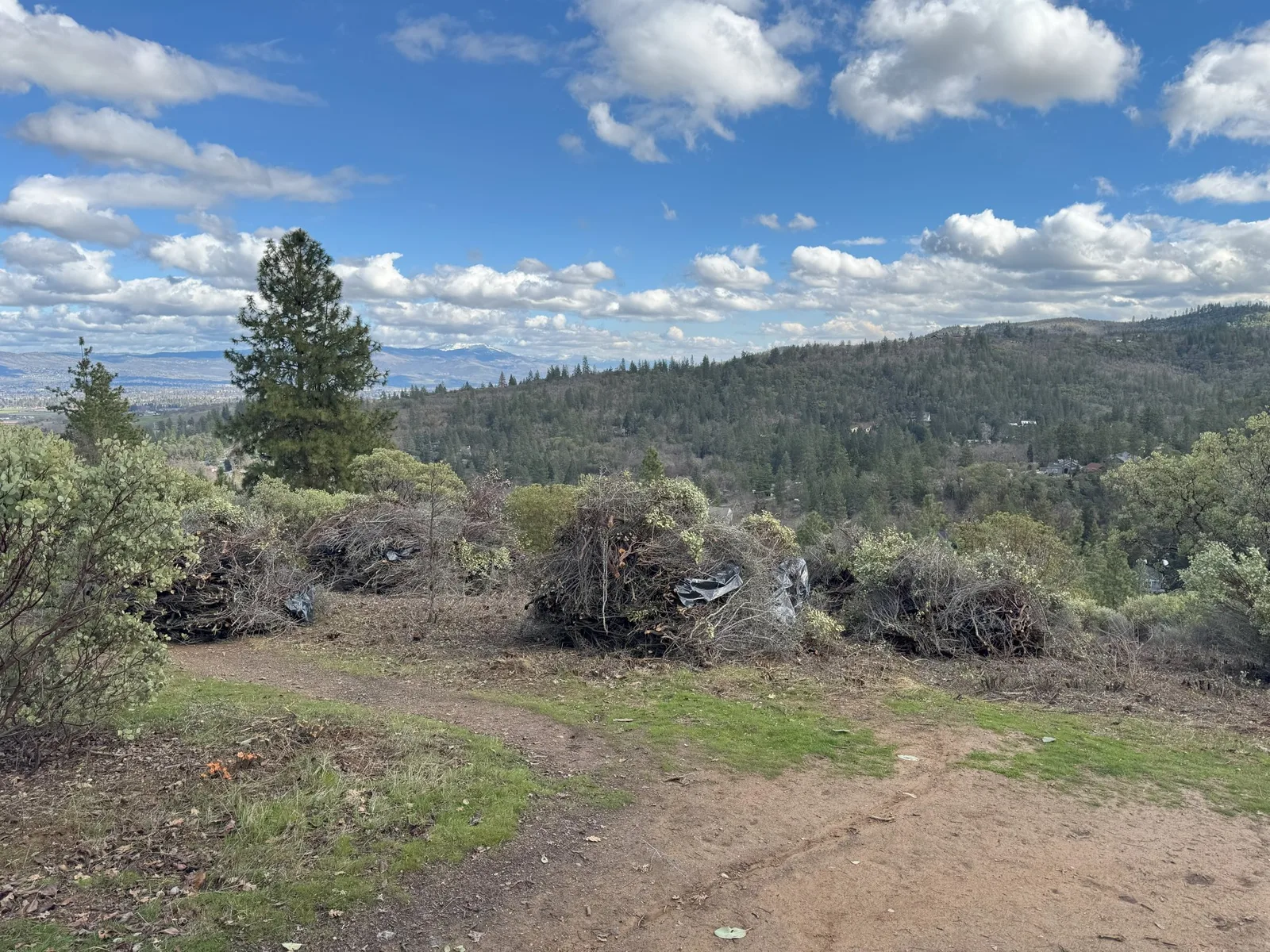
If you ask us what most often surprises buyers in Siskiyou County today, it is not the price of a home or the length of winter. It is homeowners insurance. Wildfire risk shapes what coverage costs, which companies will write a policy, and what a seller has to hand a buyer at closing. The good news is that none of it has to derail a purchase if you plan for it early.
This guide reflects what we see in local transactions as of 2026. It is general information, not legal or insurance advice; for a specific policy or property, talk to a licensed insurance agent or broker and, where needed, an attorney.
Start with the fire hazard map
California's Office of the State Fire Marshal (part of CAL FIRE) maps Fire Hazard Severity Zones, rated moderate, high or very high. The ratings drive seller disclosures and building standards, and they shape how insurers view a property.
The maps were redone recently, and they come in two layers:
- State Responsibility Area (SRA): the unincorporated land where the state is responsible for wildfire prevention and suppression. Much of the rural county outside the towns falls here. The updated SRA map took effect April 1, 2024.
- Local Responsibility Area (LRA): land inside cities and other areas protected by local fire agencies. The State Fire Marshal released recommended LRA maps in early 2025, and each city and county then had to adopt them by ordinance.
Here is what that looks like locally as of September 2026:
- Dunsmuir: under the updated map, the entire city, including the airport property, is in the very high zone.
- Mt. Shasta: the city's municipal code designates specific very high zones within city limits, most recently updated by ordinance in 2025.
- Rural areas: when we checked sample locations against CAL FIRE's zone data, points in McCloud, Mt. Shasta Forest, Hammond Ranch and Siskiyou Lake Highlands all fell in the SRA very high zone, and Lake Shastina was a mix of high and very high.
Zones can change from one parcel to the next, so always check the exact address. Type it into CAL FIRE's Fire Hazard Severity Zone Viewer, and read the Natural Hazard Disclosure report you receive in escrow, which also states the zone.
Insurance: the part to start on day one
Many insurers have cut back on new homeowners policies in high-risk parts of California, and some have non-renewed existing customers. Here that can mean fewer companies quoting, higher premiums, or a quote that depends on a roof, vent or clearance fix.
What we tell buyers:
- Get quotes before you write an offer, or in the first few days of escrow. Do not wait until the week before closing. Your lender needs proof of coverage, and some carriers take time to underwrite.
- Talk to an independent insurance agent or broker who can shop several companies, including the surplus lines market, rather than calling one company at a time.
- Ask the seller for the current policy details and claims history.
- Build time into your contract. Your purchase contract gives you contingency periods to investigate the property. Make sure the timeline leaves room to secure coverage before you remove your contingencies. We can help you structure that.
The California FAIR Plan and "wrap" policies
If private carriers will not write a policy, the California FAIR Plan is the state's insurer of last resort. As of 2026 the FAIR Plan can insure a residential dwelling up to $3 million.
Two things to understand about it:
- A FAIR Plan policy is basic fire coverage. It does not include the liability, theft and water-damage protection most people expect from a homeowners policy.
- To fill those gaps, most FAIR Plan policyholders buy a second policy called a difference in conditions (DIC) policy from a separate company. Together, the two policies come closer to a standard homeowners policy, but you will be paying two premiums and dealing with two companies.
The Department of Insurance says a more comprehensive FAIR Plan policy is being developed; until it is available, a separate DIC policy is how most owners fill the gaps. Confirm what your lender requires before you commit.
Protections if you already own
- California law requires an insurer to give you written notice at least 75 days before it declines to renew your homeowners policy, with the reasons and information on how to ask the Department of Insurance to review the decision.
- After a declared wildfire emergency, the Insurance Commissioner can order a one-year moratorium on non-renewals in ZIP codes within or next to the fire perimeter.
- The Department of Insurance's Safer from Wildfires regulation requires insurers that use wildfire risk in their rates, including the FAIR Plan, to offer discounts for specific mitigation steps: defensible space, home hardening measures such as ember-resistant vents and a Class A roof, and community-level programs such as Firewise USA. Ask your insurer which discounts you qualify for.
The state's broader Sustainable Insurance Strategy lets insurers use catastrophe models in their rates if they commit to write more policies in wildfire-distressed areas (at least 85 percent of their statewide market share). It is too early to say how much that will change the choices available to local homeowners, so keep shopping at each renewal.
Defensible space: the law and the paperwork at sale
Defensible space is the buffer between your home and the vegetation around it. Under Public Resources Code 4291, owners of homes in the SRA and in very high hazard zones must maintain up to 100 feet of defensible space (or to the property line), in two zones, shown here with the Zone 0 rules that are coming:
Zone 0: first 5 feet, not yet in effect
- Remove firewood, dead leaves, mulch and wood chips
- Keep gutters clean
Zone 1: 0 to 30 feet
- Remove dead plants, dry grass and leaves
- Keep branches well away from the house and chimney
- Move firewood and other combustibles away
Zone 2: 30 to 100 feet
- Keep grass short
- Space shrubs and trees so fire cannot climb or jump easily
Zones 1 and 2 are required now under Public Resources Code 4291. Zone 0 was approved in August 2026 but is not in effect yet.
Zone 0 is coming. In August 2026 the Board of Forestry approved "Zone 0" rules for the first five feet around homes in the State Responsibility Area and in very high zones of local areas. The Board's own summary describes removing firewood, dead leaves, mulch and wood chips from that five-foot strip and keeping gutters clean, with existing homes given several years to comply in phases. The rules are not in effect yet: in September 2026 the Board withdrew the package from state review to make technical edits before resubmitting it. For Siskiyou homes, the woodpile on the porch is the habit most likely to need changing, so it is worth starting now.
What a seller must provide (AB 38)
Since July 1, 2021, California Civil Code 1102.19 has required a seller of a home in a high or very high fire hazard severity zone to give the buyer documentation that the property complies with defensible-space law. How that works depends on the local inspection program:
- If the local jurisdiction has an ordinance requiring an inspection, the seller provides the documentation that ordinance calls for.
- If there is no such ordinance but an agency or qualified organization offers inspections, and the seller cannot get the documentation before closing, the buyer and seller can agree in writing that the buyer will obtain it within one year after close of escrow.
In unincorporated Siskiyou County, the county directs owners to CAL FIRE for defensible-space inspections, which can be requested through CAL FIRE's defensible space page. Inside city limits, start by asking the city fire department who performs the inspection.
A related law, Civil Code 1102.6f, requires sellers of homes in high or very high zones that were built before 2010 to give the buyer a notice that the home predates California's wildfire building codes, and to disclose known vulnerable features such as a wood shake roof, unscreened vents or single-pane windows.
For sellers: request the inspection early. A clean result is a selling point, and a list of items to fix is much easier to handle before you are in escrow.
Firewise USA sites near Mount Shasta
Firewise USA, run by the National Fire Protection Association, recognizes neighborhoods that organize to reduce wildfire risk together, and participation is one of the community actions insurers must recognize under Safer from Wildfires.
The City of Dunsmuir became the county's first Firewise USA site in 2024. As of September 2026, NFPA lists seven Siskiyou County sites in good standing: the City of Dunsmuir, Skyview, Shasta Acres, Gateway, Timber Hills and Hammond Ranch (all listed under Mount Shasta), and Happy Camp. The countywide Fire Safe Council of Siskiyou County also works on fuel reduction and defensible-space projects.
If you are buying in a subdivision, ask whether the neighborhood participates.
A short checklist
- Buyers: look up the fire zone early, get an insurance quote in the first days of escrow, and read the defensible-space and pre-2010 disclosures closely.
- Owners: keep up defensible space every spring, move firewood away from the house, ask about mitigation discounts, and keep photos and receipts of the work.
- Sellers: order the defensible-space inspection before you list and gather your insurance and claims history for buyers.
We deal with these questions in nearly every transaction, and we are glad to walk through them with you. Contact us, or read our guides to inspecting a mountain home, buying a cabin or second home and buying a home in Siskiyou County, step by step.
Sources
- Fire Hazard Severity Zones, Office of the State Fire Marshal
- Fire Hazard Severity Zones for Real Estate Inspections (data layer), CAL FIRE
- Mt. Shasta Municipal Code Chapter 7.60, Very High Fire Hazard Severity Zones
- New Fire Hazard Severity Zone Map Released, City of Dunsmuir
- Defensible Space, CAL FIRE
- California Civil Code 1102.19
- California Civil Code 1102.6f
- Draft Zone 0 regulations and plain-language summary (April 2026), Board of Forestry and Fire Protection
- Zone 0 regulations withdrawn from OAL review, MySafe:LA
- Vacation Rental Activity Permit FAQ (CAL FIRE inspection contact), Siskiyou County
- California FAIR Plan, California Department of Insurance
- Safer from Wildfires, California Department of Insurance
- Sustainable Insurance Strategy updates, California Department of Insurance
- California Insurance Code 678
- Dunsmuir becomes first Firewise community in Siskiyou County, Siskiyou News
- Firewise USA, National Fire Protection Association
- Firewise USA sites in good standing (data layer), NFPA
- Fire Safe Council of Siskiyou County